
Authors


Euro 0-2 year credit market: 2026 marked by a rebound in issuance
The euro credit market with a maturity of less than two years plays a key role in short-term funding for Investment Grade issuers and in the placement of liquidity by money market investors.
In 2026, it was marked by a clear rebound in volumes, strong sensitivity to the geopolitical context, and a continued predominance of floating-rate issuance.
This November bulletin reviews the main trends observed up to the end of October 2026 in the Investment Grade universe, excluding sovereigns and agencies.
During the first ten months of the year, investment-grade bonds maturing in 2026 amount to €216 billion, with an average original maturity of 5 years. Securities with an original maturity of less than two years account for 18% of this volume.
Under European regulation, please note that standard money market funds may invest up to two years.
Issuance volumes
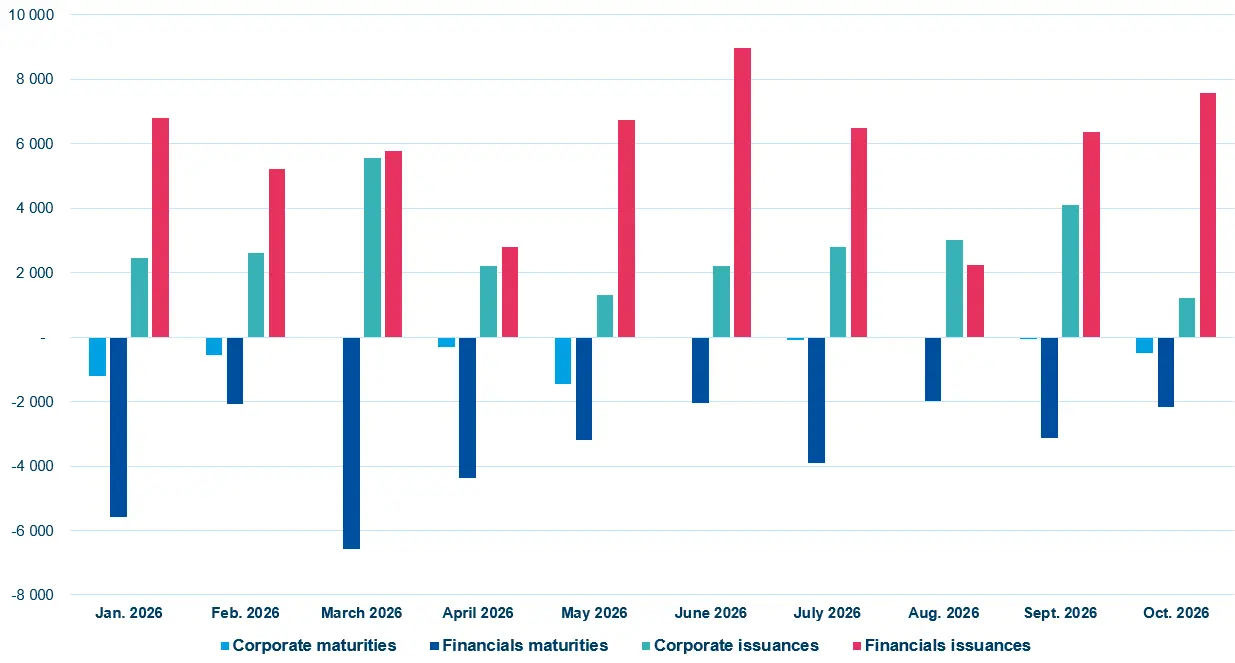
Securities with an original maturity of less than two years maturing in 2026 amount to €39 billion of which 9% are corporate issuers and 91% are financial issuers, representing €3.5 billion and €35.5 billion respectively.
Issuance since the start of the year in the 0-2 year segment amounts to €86 billion. Of this, 32% are corporate issuers and 68% are financial issuers, representing €27 billion and €59 billion respectively.
Maturity and issuance breakdown for bonds under 2 years in 2026
Source: Amundi Money Market Funds Investment Strategy / Bloomberg
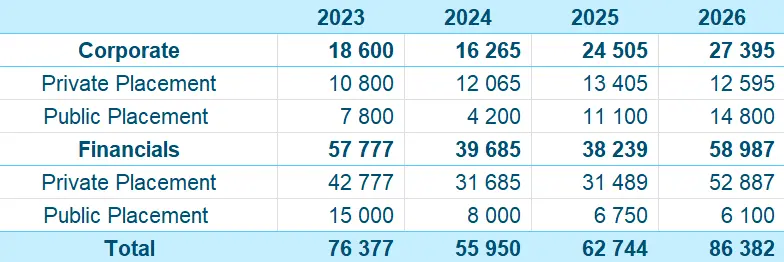
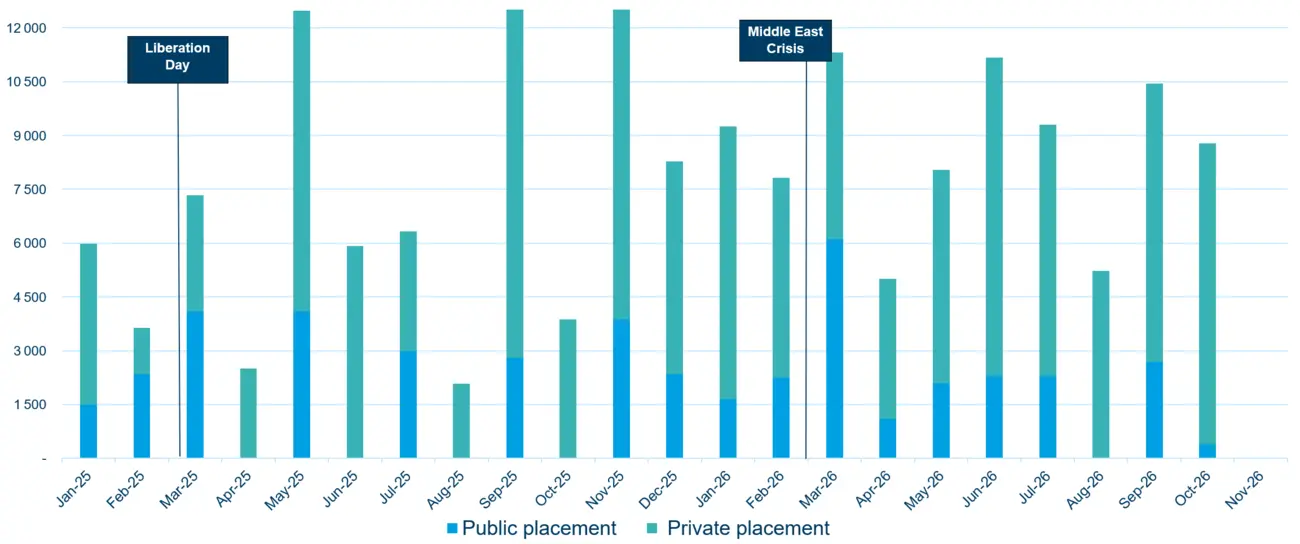
Issuance volume in 2026 is up by €23 billion compared with 2025.
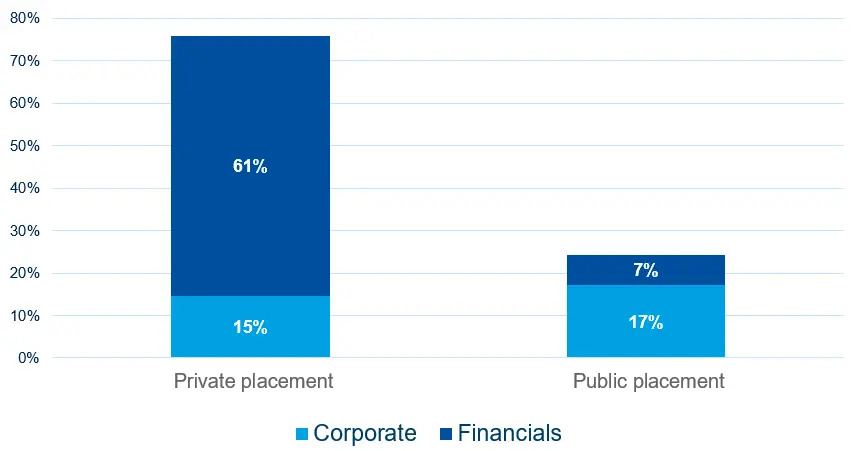
The table below shows that around 24% of issued volumes took the form of public placements, versus 76% in private placements.
Unlike in previous years, when corporate issuers predominantly favored private placements, they made greater use of public placement this year, which accounted for 54% of their issuance volume.
This move should however be put into perspective, as it is mainly driven by multi-tranche issues from hyperscaler issuers, notably Amazon and Alphabet.
Breakdown of issuance volume since the start of the year
Source: Amundi Money Market Funds Investment Strategy / Bloomberg
Issuance structure
A. Format
Private placements are mainly used in the short-term bond market. This makes the placement process easier for investors.
Breakdown of issuance volume by placement type and sector since the start of the year
Source: Amundi Money Market Funds Investment Strategy / Bloomberg
B. Rate type
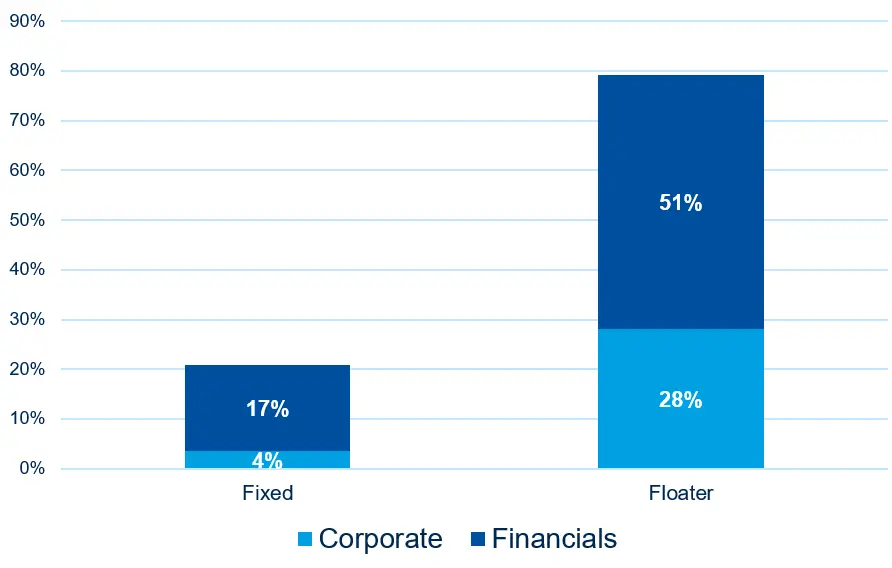
In the 0-2 year short-term credit market, 80% of issuance is in floating-rate format, making it compliant with European money market fund regulations and aligned with their investment needs.
Issuance volume by rate type and sector
Source: Amundi Money Market Funds Investment Strategy / Bloomberg
Spread dynamics
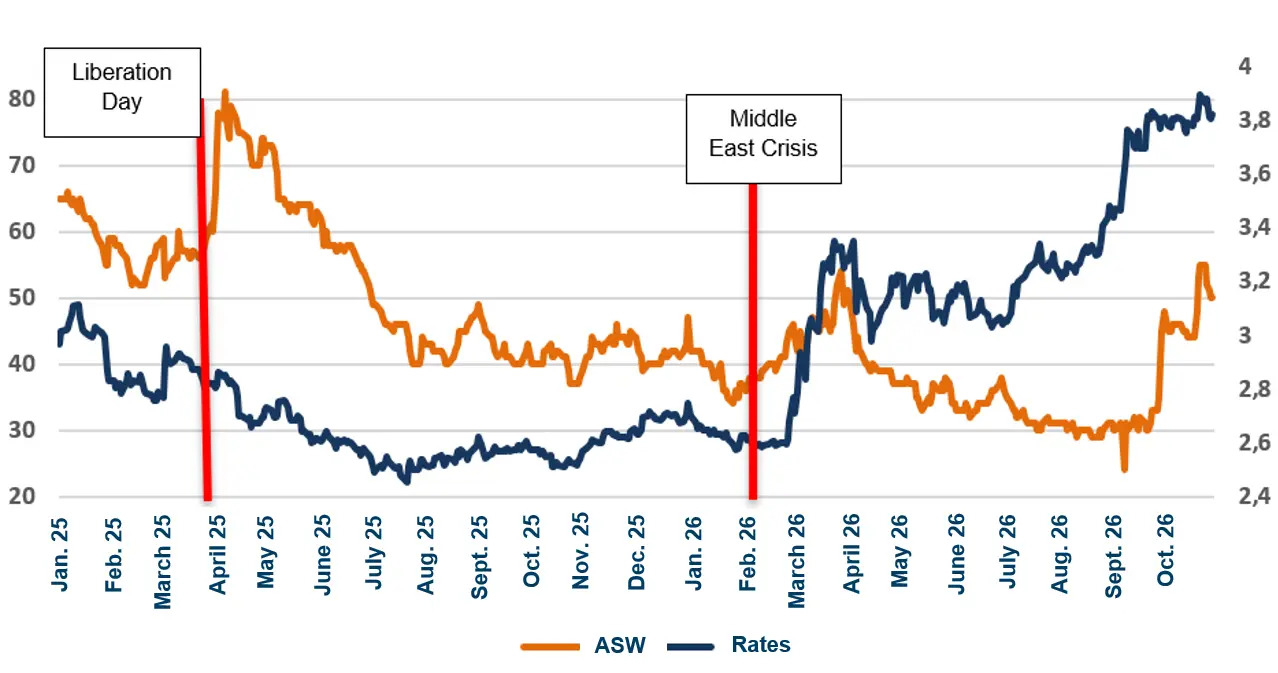
The charts below illustrate the different refinancing dynamics of issuers depending on the market environment.
Issuance volumes in EUR million by maturity and sector
Source: Amundi Money Market Funds Investment Strategy / Bloomberg
ICE BofA 1-3Y credit index in ASW spread and in yield
Source: Amundi Money Market Funds Investment Strategy / Bloomberg
Pressure from rising oil and gas prices is increasing inflation and rate hikes risks. This is reflected in the rise in bond yields of 120 bps on the 1-3Y credit index since the start of the year.
By contrast, credit spreads initially widened by 7 bps, then tightened quickly through end-September due to strong demand for these maturities.
We also observed a return of issuers to short maturities, which allowed them to refinance more cheaply than on the long end. Investor demand focused on the search for term premium, helping to offset this spread widening from April 2026 onward.
Since September, persistent inflation expectations have been putting pressure on long-term rates, leading to wider spreads. The year-end outlook and weaker demand are also creating tension on spreads.
A dynamic short-term bond market, driven by the use of private placements in floater format
The euro 0-2 year short-term credit market stands out for the predominance of private placement in floater format. This reflects both investor regulatory constraints and issuers’ search for flexibility.
Although corporates made greater use of public placement this year, this trend remains largely concentrated among a few identified issuers and does not change the market’s overall structure.
Supported by a clear rebound in issuance, up by €23 billion versus 2025, and by sustained investor appetite, especially from money market funds, the euro Investment Grade 0-2 year credit market appears to be a complementary segment to commercial paper in issuers’ short-term refinancing.
Need clarification on the money market?
Discover our solutions