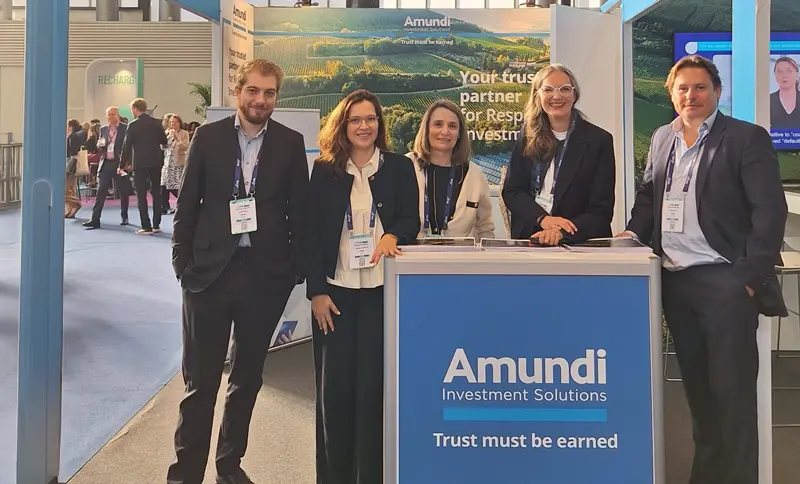
Amundi was a proud sponsor of the 20th edition of PRI In Person, the largest responsible investment event, held in Amsterdam from 13 to 15 October 2026. Over the three days, Amundi experts engaged with clients, partners, and peers on practical ways to scale responsible investment globally.
Amundi’s activities during the event
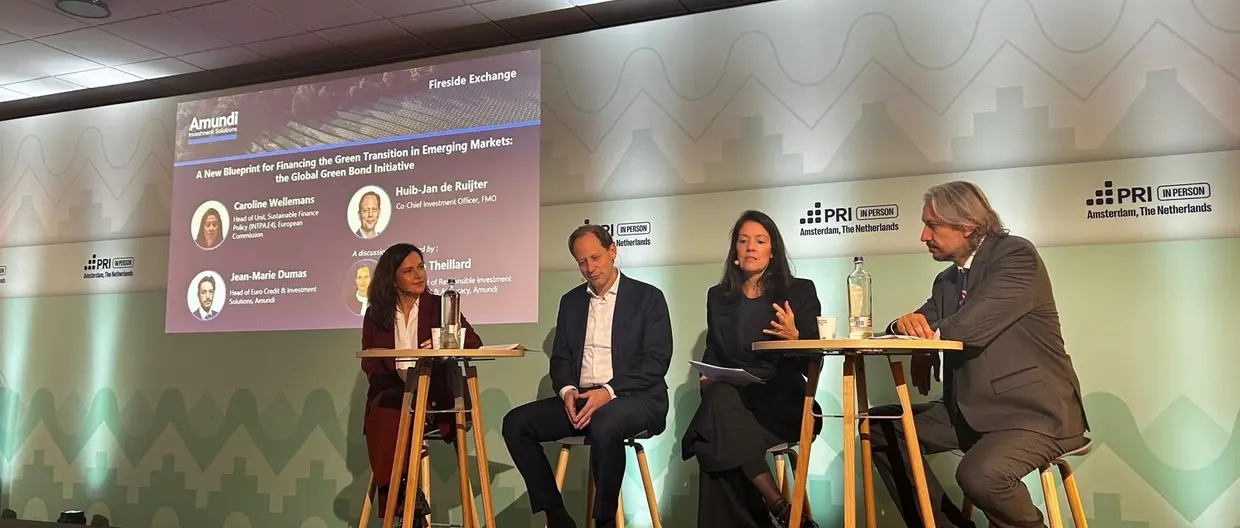
| To open the event, Amundi hosted a fireside exchange titled “A New Blueprint for Financing the Green Transition in Emerging Markets: The Global Green Bond Initiative”. Jean-Marie Dumas, Head of Euro Credit & Investment Solutions, at Amundi joined Huib-Jan de Ruijter, Co-Chief Investment Officer at FMO, the Dutch entrepreneurial development bank, and Caroline Wellemans, Head of Unit, Sustainable Finance Policy (INTPA.E4) at the European Commission. |
Together, they discussed how blended finance structures, such as the GGBI fund, could serve as a blueprint for public–private partnerships and mobilise private capital for the green transition in emerging markets.
Nature finance was also a key theme, with Amundi sponsoring an event organised by the Finance for Biodiversity Foundation, which explored practical ways to finance the nature transition, from natural capital investment and green bond strategies to nature-related engagement, as well as the role of global initiatives such as the Tropical Forest Forever Facility (TFFF).
Amundi representatives and experts also joined discussions on national transition strategies, collaborative stewardship, and the creation of long-term sustainable value.
Main takeaways from the discussions:
Blended-finance platforms models such as the GGBI framework can help accelerate capital mobilisation and bridge the climate finance gap where it is needed most;
Innovative structures can also mobilise public and private capital at scale, helping close the nature financing gap. The TFFF shows how investment returns can support long-term forest protection, delivering benefits for climate, biodiversity, and ecosystem resilience.
Natural capital is moving up the investment agenda and should be treated as a standalone investment theme.
Adaptation should become a core investment consideration as physical climate risks continue to rise, with financing adaptation solutions critical to safeguarding businesses and long-term returns.